Showing posts with label Si Han. Show all posts

Thursday, 18 June 2015

Overall OELP trip reflection ✈️πŸ‡¨πŸ‡³

Overall reflection ✏️
After OELP, I felt that the class have matured more and grown more together. Throughout the seven days that we have been together, we have become more bonded and closer. Last year's class outing was unsuccessful, with only 5 people being able to go. However, this year, the number of people who turned up was 28. This overseas trip would not be the same if I had not gone with 2I. 

⭐️Situational awareness⭐️
Through this trip, I also truly learnt the meaning of two important words, and that is "situational awareness". Being situationally aware does not only mean that we should only look out for ourselves and pay attention to the surroundings ourselves, instead, it also means to remind our classmates to pay attention to their surroundings so that no one gets left behind. There were times in which we would get carried away taking photographs and not pay attention to the tour guide and obstruct other people's way. When this happens, our teachers would remind us to practice situational awareness and to pay attention to our surroundings and be alert at all times. 
⭐️Punctuality⭐️
Aside from this, I also learnt the importance of punctuality and looking out for one another. There were some days in the trip in which our classmates overslept and caused our schedule to be delayed. I feel really bad when that happens because my classmates get scolded and I knew that they could have made it on time if I had noticed that they were missing for breakfast and had gone up to their hotel rooms to check. However, no one noticed because we did not bother to look out for one another. It is really troublesome when our schedule gets delayed and all that trouble could have been prevented if we have cared more. 
 ⭐️Everything about Shanghai and Yangzhou⭐️
The term "everything" is so broad and vague and I would avoid using this word. However, the things that I have learnt about Shanghai and Yangzhou is simply too much to be listed down individually. 
First of all, I have learnt so much about Shanghai and Yangzhou's history from this trip. From the tourist attractions and from the guide, I have learnt so much about Yangzhou and Shanghai. I now know that Shanghai didn't always used to be this wealthy and commercialized. It was once a poor fishing village and had developed greatly since then. Although Yangzhou seems to pale in comparison to the modernized and commercialized Shanghai, I feel that Yangzhou has it's own unique charm. It has history behind it too, and one of the most renowned person in Yangzhou would have to be Zhu Zi Qing, who was a popular writer among people in Yangzhou. 
Secondly, I also learnt to treat everything with an open mind, and not making harsh conclusions about a particular place. My perceptions of China wasn't that great before OELP. However, after this trip, my perceptions changed greatly. I once thought that all Chinese in China were rude and loud. However, after this trip, I realized that not all Chinese are rude. While some might push and shove us out of the way, majority of the Chinese would make way for us and some even nodded their heads in a friendly manner at us when they realized that we were on a school immersion program. Some even asked us which country we were from and made small talk with us! This revealed to me that I should never make harsh conclusions about a country unless I have been to that country and experienced what it is like to live there. 
I also learnt that Shanghai is economically strong and stable while Yangzhou goes to great lengths to preserve heritage and greenery. Shanghai has tourist attractions that reveals just how much wealth the city has. The bund showcases China's banks and also international banks, which suggests how rich the city is. Tourist attractions such as the oriental pearl tower is a skyscraper. Towering over smaller buildings at over 200 levels. The ambiguous and modern architecture of that place suggests just how much money Shanghai has in order to build that. Yangzhou has places that suggests that they were intentionally preserved so as to preserve heritage and greenery. Geyuan garden and slender west lake were not demolished so that greenery would be preserved. Zhu Zi Qing residence was not demolished as it was significant to Yangzhou's history, since Zhu Zi Qing was well known in Yangzhou. 
Yangzhou's education system is a bit different from Singapore's, in a sense that students there have lesser project works and and that students there are required to report to school at around the same time as us, but stay back in school late into the evening. They are required to be even more competitive than students in Singapore, due to the fact that there is overpopulation in China and that students have to do exceedingly well in their fields in order to find good jobs in future. In Singapore, we do not face that problem and finding jobs are not as difficult for us. 


2015 OELP Trip reflection ✈️πŸ‡¨πŸ‡³

✈️ 1st day in China (Shang Hai)✈️
After the 6 hour flight from Singapore, we finally touched down in Shang Hai. It was approximately 4:30 pm after we collected our luggage and departed from the airport. On the tour bus, the tour guide briefly explained to us the history of Shang Hai and things we could do in Shang Hai. From the bus ride, I learnt that China was once a fishing village and it developed a lot since then. I also learnt that the French concession was a popular place among foreigners back then, thus it is preserved till today. I also learnt that ε°η¬ΌεŒ… was a popular dish in Shang Hai :D. We then travelled to a restaurant to eat dinner. 

     
                                               Our first dinner in Shang Hai :)

After dinner, we went to the bund, which is a popular tourist attraction in China. We were greeted by vibrant and colorful lights when we reached the bund. Everyone looked on with awe at the bright lights and the modern buildings that were located along the river. We walked along the river and looked at the banks, important business buildings located along it. After that, we went onto a ferry and were able to take more photos and get to see the buildings located at the bund better. 


                                                                  CID group 5⃣


                                                            The bund

During debrief later on in the hotel, our teacher told us more about the bund. We learnt that China was able to have economic growth every year due to the money made by the the bund. In terms of tourism, the bund was able to help China gain money due to the fact that the bund is a popular tourist attraction and tourists would pay money to visit it. (e.g.paying money for the ferry tickets) Also, the bund also has banks and business buildings located along its River and these infrastructures are the backbone of China's economy. I feel that the bund is something like the Singapore River, because both places are tourist attractions and both places have important buildings and infrastructures located along the river. Tourists who go to these places would know how wealthy and economically strong a country is by looking at the bands and important businesses located in the country. Local banks and international banks are found along the river and thus illustrates the strong economy of China since China has its own banks. Multiple business buildings also highlight the fact that China was able to do business with other countries and have people from other countries come to China to do business. Many are attracted to the banking finance sector of Shang Hai. Local business buildings also show that China is strong in terms of economy. Shang Hai is indeed an important city for economic growth. 

🚌 2nd day in China (Yangzhou) 🚌
We woke up early today because we needed to travel to Yangzhou and the bus journey was 4 hours long. 
We went to the Chinese paper cutting museum, geyuan garden and the grand canal on that day. We also went to a local supermarket there. It was raining throughout the day and although everyone was feeling really cold and tired, we still managed to get through the day leaning new things. I felt that the class really displayed class spirit on that day because although the rain was pretty heavy at certain times of the day, many of us offered to share our umbrellas with those who didn't have one. To that, I would like to say that I'm really proud to be part of 2I. 
In the Chinese paper cutting museum, we learnt to cut up really thin paper into intricate designs and it was really hard for me because somehow, I always manage to do badly in art. However, with the guidance of the people there and cutting according to the lines indicated, I managed to produce a decent piece of artwork. They also gave us a pair of gold and sharp scissors that had intricate designs as a gift to us. 

We also observed the beautiful scenery and plants in geyuan garden. Geyuan garden had plenty of greenery and also had a lot of rock structures in it. It was beautiful, as it was also home to an extremely wealthy guy who lived in the past. The house itself was huge, with its kitchen and bedrooms separated from one another. It was preserved really well and visitors could go into the house and really know how it felt like to live as a wealthy person in the past. 

     
                                                                δΈͺε›­


                                     My CID group and I in front of geyuan garden 

We also went to the grand canal and we cruised down the grand canal in a boat and was able to observe the little things that make the canal beautiful and the scenery around it. While on the boat, there was also a documented guide about the grand canal and the history of the grand canal was explained thoroughly in the video. 

                                                         
                          Scenery observed when on the boat on the grand canal.

During debrief, we compared the difference between Shanghai and Yangzhou and also talked about the importance of preserving Chinese heritage. 
The most obvious difference between Yangzhou and Shanghai would be the pace of life. The pace of life in Shanghai is faster than in Yangzhou. In Yangzhou, there are many places that indicate that Yangzhou has a slower pace of living, for example, Yangzhou has more tourist attractions that focuses on scenery and Chinese heritage. Yangzhou has tourist attractions such as geyuan garden, grand canal, slender west lake and 24 bridges that focuses on greenery. However in Shanghai, there are tourist attractions such as the oriental pearl tower, chenhuangmiao, Shanghai urban planning centre and Shanghai museum which indicates that the pace of life there is faster, since there is a higher level of technology used.
Shanghai is also more modernized than Yangzhou. Shanghai is more modernized as there are many foreigners going there to do business since it is a thriving business port. Thus, it is modernized because of the economy there.   
Toilets in Shanghai are also cleaner, because there are more tourists going there and having cleaner public areas would leave a better impression on the tourists. 
Also attractions such as the Chinese paper cutting museum in Yangzhou is also preserved due to the fact that the government wants to preserve heritage. It is preserved so that the Chinese would still be in touch with traditional beliefs. However, there are lesser tourist attractions in Shanghai that    preserves heritage. 

       
       Tourist attractions in Yangzhou focuses more on greenery and Chinese heritage. 

We also compared the stuff that could be found in China's supermarket but couldn't be found in Singapore's supermarket. We saw that a four poster bed was on sale in the supermarket there and beds are not sold in Singapore's supermarket. 
Also, we found that the supermarket there did not sell nerf guns or milo powder, products that are common to us Singaporeans. We later found out the reason for the lack of imported goods such as milo powder and beef guns was due to the fact that China was strong enough economically to produce their own products. Products produced by them would be much cheaper as compared to imported goods since goods are produced in China instead of being transported from other countries. We also found that oil, water and meat was much cheaper there as compared to Singapore since Singapore's oil, water and meat are imported and would be more expensive.

🏫 3rd and 4th day in China (Yangzhou) ( school immersion)🏫
We went to shuren school on these two days so that we can gain more insight into the Chinese students' lives. We also went to a local bookstore on the fourth day.

We walked around shuren school with guidance from the teacher and principal there. We realized that there was actually a park-sized garden in their school and their school was quite big. We also observed how a Chinese lesson was conducted there. Aside from that, we also met our buddies and exchanged gifts with them. We also learnt how to write calligraphy and also had a wushu lesson with them. They were really interested and willing to learn more during the wushu lesson and I felt that they could perform better than us. We also had a competition with the students in their school and there was a basketball match between their school and our school. Although we lost the match, I felt that we displayed more school and class spirit throughout the match by cheering for our friends and I felt that that was what mattered the most. The most exciting part of the school exchange would have to be the watching the performances shuren school has put up for us and also performing our performance to them. We could truly showcase our hard work since we put in a lot of time and effort into putting up the performances.  I felt quite nervous before the performance but the entire process of performing for the students if shuren school was really fun:)
      
                                        Garden (more like park ) in their school 

        
                                                             Shuren school 

                                  
                                             My buddy and her friends with me 

                        
                                                       Class performance 
          

Through this experience, I have really seen what it is like to study in Yangzhou. There are many differences in studying in a school in Singapore as compared to studying in a school in Yangzhou. 
* Class participation*
In Yangzhou, students are more participative than in Singapore because students are willing to participate actively in class while in Singapore, students are called on by their teachers. 
*Mode and duration of travel*
My buddy also told me that she either bikes or walks to school and the journey only takes her 10 minutes. However in Singapore, I would know of many who would take public bus and MRT to school and the time taken to travel to school would be close to an hour.
* Group projects and individual work *
 There were little group projects done in China and most work done is mostly individual. Perhaps it's because there are more people in China and students thus have more competition to become better.
*School spirit*
We also displayed more school spirit than the Chinese from the school even though they had more people to cheer on their basketball team against ours. 
*Food served* 
Lunch there was served by lunch ladies and it was compulsory for meals there to comprise meat, soup vegetable and fruit. It is vastly different from Singapore where we could buy our own food and can also buy sugary drinks and unhealthy food. 
     
            Lunch in shuren school is different from what we would get in Singapore. 

Also, when we went to the local bookstore, we saw that there were many Korean and Japanese books that was on sale. This shows that there are many Korean and Japanese who lives in China. This might be because people from different countries come to China to do business or seek better opportunities. Those books might also be on sale so that the Chinese would be able to learn new languages so that they would be able to work in Korea or Japan. We also found calligraphy paper and chaptehs on sale and these items are sold so that tradition and culture would be preserved. The bookstore also had little English books except for assessment books and thus shows that the Chinese there hardly read English books for leisure.  The most interesting observation that I have made about the bookstore would be the fact that they sell books about our founding father Mr Lee Kuan Yew. My inference would be that the Chinese people looks up to our founding father and thus books about him, about our nation can be found in local bookstores in China. 
                                                                   Science assessment books that would be written in English in Singapore are in Chinese. 

                                      
                                        Mr Lee's memoir is found in the local bookstore. 

πŸƒ 5th day in China (Yangzhou)πŸƒ
On this day, we went to the local market, slender west lake and 24 bridges, zhuziqing residence and donguan street.
The local market was vibrant, with peddlers setting up mats on the floor and persuading people to buy their crafts. As the name suggests, it was truly a "local market visit" for us, without souvenirs to buy since it catered to the locals.There were pet shops, pottery shops, shops that sold plants and even a mini aquarium. Suffice to say, the local market emitted a positive and lively vibe. 
                                     
                                                         Local market visit

Next, we headed to slender west lake and 24 bridges and we were given 2 hours there to admire the greenery there. I thought that 2 hours would be too much to walk through  the park, but the duration proved to be just right. Our guide told us that many poets were inspired by the beautiful scenery there and composed poems based on the slender west lake. It was beautiful there and there was a lot of greenery. Our class took a class photo( excluding the boys) on the 24 bridge because there was 24 steps on that bridge and our class had 24 girls so. Each girl stood on one step:)


                                            Slender west lake and 24 bridges 

After that, we went to the zhuziqing residence to know more on how zhuziqing lived and how he came up with inspiration to write so many Chinese novels. We learnt there that zhuziqing wrote many well known Chinese novels, not only θƒŒε½±, which my class was familiar with since our Chinese teacher promoted it endlessly. 

                                   
                                                       Zhu Zi Qing residence 

We went to donguan street next, and I bought most of my souvenirs for my family and friends there. However, I felt that it wasn't a waste of money as it was money well spent:) Also, my friend also insisted to buy a toy chicken (I really have no idea why) even though it was such a waste of money and has no practicality. It had many quaint shops tucked away in alleys there and it was really fun to venture the street together with my CID group. Throughout this trip, we also reminded each other to carry our bags in front of us so that pickpockets would not have easy access to have valuables. I felt that among all the places that we were brought to to buy souvenirs, this was the best place among the others. One shop that was really popular among my class was the tea shop. 


                                                        Donguan street
       
                                        Group selfie feat. annoying chicken 

During debrief, we discussed the importance of preserving heritage. The Zhu Zi Qing residence and slender west lake could easily be demolished and be built into infrastructure that would be more useful economically. There were other parks in China and parks do not make as much money as banks. However, slender west lake and 24 bridges were preserved for a reason since the government did not demolish it. The reason why they are not demolished is because the government does not want the Chinese to lose their Chinese roots and forget their heritage. Zhu Zi Qing's residence was preserved because he was the pride of Yangzhou and he represents Yangzhou through his novels and slender west lake was preserved because it has a rich history behind it and has a deep sense of Chinese culture.We thus understood the importance of preserving heritage from this.

☀️ 6th day in China (Shanghai) ☀️
We travelled back to Shanghai today and we had to wake up super early again. 
We went to Chenghuang Miao first and once again, we could find many shops that sold souvenirs and it was really crowded there. It was really lively and the architecture of the temple was really grand. We also spotted multiple Starbucks shops there and the price of coffee there was about the same as Singapore. It was probably due to the fact that Starbucks is a company that is established overseas and the prices of coffee there is defiantly much higher than what one would get from a local coffee shop. 
                                    
         
                               Chenghuang Miao ( really crowded as shown above)

Next, we went to the oriental pearl tower and it was quite terrifying when we had to walk on a transparent platform and get to see everything below us when we were that high up. From the oriental pearl tower, we could see all the way to Taiwan and it was definitely an interesting experience. I remember being really scared and thinking of all the worst case scenarios if the glass platform suddenly gave way beneath our feet. I felt that being in the lift and getting to over 200 stories all the way up to the place with the glass platform was a cool experience too.


                           My CID group and Mr Dela Cruz on the oriental pearl tower.

After that, we went to Tian Zi Fang and the Old French concession. Tian Zi Fang is an alley that sells souvenirs and decorative goods at a slightly higher price than donguan street and Chenghuang Miao. I felt that it was a quaint place because stuff that was sold there focused less on touristy souvenirs, instead Tian Zi Fang sold more unique handicraft.

The Old French concession was an interesting place as it was an indication that westerners used to reside in China in the past. I feel that it still caters to the westerner's preferences now because there were many food stores that would be commonly found in western countries. (E.g Godiva)  It's architecture follows that of those in western countries and walking down the streets of the old French concession really does make one feel as if they are in a western country. 
  
                                               Italian restaurant found here.

We also went to Shanghai science and technology museum, and there were many wax figures of animals from different parts of the world. There was also plaques in front of the animals that displays information about the animal so that we would have more knowledge about them. The experience was like going to the zoo, with real life animals replaced with wax figures of animals that couldn't move or respond.  
     
                                            Failed group selfie πŸ˜‚
     
     
                   Wax figurine of goats at the Shanghai science and technology museum 
                                            
 Our class behaved badly today due to the fact that we were ignorant and did not practice situational awareness. We were all so busy taking pictures at tourist attractions that we ignored the tour guide multiple times when he was explaining to us about a particular place. We also obstructed people's way because of that. When we were told to clear our rubbish on the bus, few heeded his advice and litter was thus strewn all over the bus. I guess everyone's spirits were dampened but we were all disappointed in our actions. We thus learnt the importance of situational awareness from today's trip.

✈️ 7th day in China (Shanghai) ✈️
Alas, all good things must come to an end and in a blink of an eye, our oelp trip has ended. We were all sad that we would never get such an opportunity to travel overseas with our class, 2I anymore. I really felt that our class have bonded so much throughout this trip and I know that the memories that have been created throughout this trip would never be forgotten. 

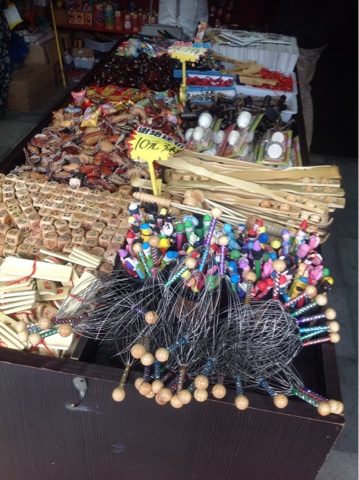
On the last day, we went to qibao ancient town and Shanghai museum. Qibao ancient town sold souvenirs and I felt that it was less of a touristy place as compared to donguan street and Chenghuang Miao. Although all these places sold souvenirs and what not, qibao ancient town was more localized. There were many shops that sold all items for 10 yuan. Aside from that, we also saw shops that had Chinese traditional costumes and provided photography services. I found that interesting, as that can't be found in other places.
   
                                                  Qibao ancient town

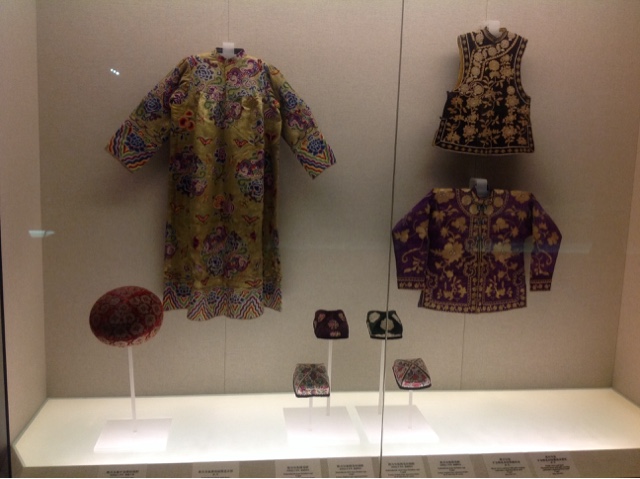
 Shanghai museum was fascinating, as it houses many intricate and detailed ancient art pieces and pottery. Interesting fact about this museum is that the brochures provided there were printed in multiple languages such as English , Chinese and Korean as it is a really famous attraction and perhaps tourists from many different countries go there. All of the items were ancient and dated back to centuries ago. I found the art work most interesting, as artists then really depicted what life was like back then. 
       
                                                Pottery found in the museum. 

       
                              Traditional Chinese costume back in the olden days. 

Finally, it was time to head off to the airport and return to Singapore. On the bus while headed to the airport, I could feel that everyone was really reluctant to leave China because we know that our class, 2I would never get this chance to bond with each other already. Although feeling sad to leave China, I also felt happy because I know that I have just passed an important milestone that I would remember forever in the years that I'm in RV. With that in mind, I smiled and vowed to myself that I would remember this trip forever. 

Thursday, 30 April 2015

CID reflection 7- Festivals in China

                        My group's impression of China's culture.

Researching about the festivals in China really caused me to gain some insight into what festivals the Chinese celebrate in China. Initially, I thought that the festivals that the Chinese celebrate in Singapore would be the same as to the festivals the Chinese celebrate in China. However, I was wrong. While there are festivals in China that we also celebrate in Singapore such as - Chinese New Year, dragon boat festival and mid autumn festival, there are also festivals that China celebrate but Chinese in Singapore don't. For example, Chinese in China celebrate winter solstice, double seventh festival, laba festival and the chongyang festival. These are the festivals that we do not celebrate in Singapore. I researched and found out more about the festivals that I mentioned above. 

Chinese New Year

Chinese New Year, also known as the spring festival,  is widely celebrated in China, and is the most popular festival in China. It is a time for families to be together. Wherever they are, people come home to celebrate the festival with their families.

The New Year's Eve dinner is called Reunion Dinner, and is believed to be the most important meal of the year. Big families – families of several generations sit around round tables and enjoy the food and time together. 

There are many cultural activities that occur during the festival. Rural areas and small towns retain more traditional celebrations, such as setting off firecrackers, ancestor worship, and dragon dances. Setting off firecrackers and fireworks are common during the Spring Festival season all over China.

Dragon boat festival 

Dragon Boat Festival, as known as Duanwu Festival, is a traditional and statutory holiday in China, occurring on the 5th day of the 5th month of China’s lunar calendar. The Chinese will have a day off that day.

The main customs of the celebration include eating rice dumplings zΓ²ngzi, hanging calamus, Chinese mugwort, smoked herbs, and Chinese Angelica ; drinking Realgar wine , and racing dragon boats. Dragon boat racing is the most popular traditon.


Mid autumn festival 

The Mid-autumn festival is the second most important festival after the Spring Festival to Chinese people. Every year, when the festival comes people go home from every corner of the country and the world to meet their family and have dinner with them, admire the full moon and eat mooncakes. Chinese people will have a three-day holiday from September 6 to 8 during this festival.

Chinese people believe a full moon is a symbol of peace, prosperity, and family reunion. On Mid-Autumn Festival night the moon is supposed to be the brightest and fullest, which is why the festival is also known as the"Day of Reunion" and the "Moon Festival"


Winter solstice 

I found this festival to be the most interesting, as i find that the name of the festival is very majestic, mysterious and wonderful. The Winter Solstice usually falls around December 21, and more often refers in particular to the day when the sun is exactly at the celestial longitude of 270°. It marks the longest night and the shortest day in the northern hemisphere. In China, the Winter Solstice was originally celebrated as an end-of-harvest festival. Today, it is observed with a family reunion over the long night, and pink and white tangyuan are eaten in sweet broth to symbolize family unity and prosperity. 


Double seventh festival

Falling on the seventh day of seventh lunar month, the Double Seventh Festival in China is what Valentine's Day to the western countries. As it is a day of great importance to girls, the event is also called Young Girls' Festival. Because of the beautiful legend about Niu Lang and Zhi Nu, the festival has been endowed with the meaning of great romance. The story of Niu Lang and Zhi Nu is bittersweet, as the legend of Zhi Nu and Niu Lang ended with Zhi Nu only being allowed to see Niu Lang on the seventh day of the seventh lunar month every year, thus giving the festival the name, "double seventh festival".


Chongyang festival

Held on the 9th day of the 9th lunar month, Chongyang Festival is also called Double Ninth Festival. In Chinese, nine is regarded as the number of Yang (which means masculine as opposed to Yin which is feminine). The ninth day of the ninth month is the day that has two Yang numbers, and 'chong' in Chinese means double which is how the name Chongyang was created. It is a day for people to eat Chongyang cake, drink chrysanthemum wine, climb mountains, and pay homage to chrysanthemums. During the festival, Chongyang cake and chrysanthemum wine is the traditional cuisine. Climbing mountains and admiring beautiful chrysanthemums are interesting events that add to the festival creating a joyous atmosphere.

Laba festival ( rice porridge festival)
Falling on the eighth day of the 12th lunar month, Laba Festival was originally an occasion for people to give sacrifices to their ancestors, and to pray to heaven and earth for a good harvest and good luck for the family. Many years later, it has become a Laba Congee eating event - a porridge that contains different types of rice, beans, dried nuts, bean curd, and meat.After hours of boiling, the porridge is offered as a sacrifice to the ancestors and is presented to friends before noon. Family members eat Laba Porridge together and leave some, symbolizing a good harvest next year. Some kind people hand out the porridge to the poor to show their pity. And in some regions people believe that pasting porridge on the flowers and fruit trees indicates the blossom of flowers and good fruition.


These are the festivals which are widely celebrated in China, and I found all the festivals interesting, as they all have legends and stories behind them. Some of the festivals that are celebrated in China are also celebrated in Singapore, while the others are not. I learnt a lot from researching about the festivals that are celebrated in China but not in Singapore. 


Thursday, 23 April 2015

CID reflection 6- Is the Merlion a good icon to represent Singapore?


In my opinion, I feel that the Merlion is not a good icon to represent Singapore. There are so many other icons that can better represent Singapore, for example,our iconic foods such as the chili crab and durian. There is also Marina Bay Sands. However, in this blogpost, I'm just going to elaborate on one single icon which I truly feel represents Singapore the best. That is, the Singapore river.
According to Wikipedia, The Merlion do not feature in any local folklore or myths of Singapore, and was only used in Singapore initially as the logo for the tourism board. I feel that the Merlion should not be the icon used to represent Singapore as as stated by Wikipedia, the Merlion was originally thought of as a logo for the tourism board and it does not feature any folklore of Singapore. This icon should not be used as I feel that an icon that will truly represent Singapore would be one that shows the growth of Singapore and something that shows the history and uniqueness of the icon to Singapore. The Merlion is merely a stature that has half the body of a lion while half the body of a fish. It does not signify anything or show the history nor the uniqueness of the icon to Singapore since there is no story behind it. The Merlion might be a popular place among tourists to go to since its a famous tourist attraction in Singapore, but I feel that it does not represent Singapore accurately. 
What I feel is a good icon to represent Singapore would be the Singapore river. The Singapore river was once the old Port of Singapore , sheltered by the southern islands. Historically, the city of Singapore initially grew around the port so the river mouth became the centre of trade, commerce and finance. To this day, area around the old Singapore River mouth, the Downtown core, remains the most expensive and economically important piece of land in Singapore. There is a rich history behind the Singapore river and it has been there since a long time ago. It used to be a trading port, which was the main contributing factor of Singapore's economic development then. It still contributes to Singapore's economy now, with it being s popular tourist attraction. The Singapore river used to be very dirty, smelly and littered with rubbish. People use to aviod walking near the Singapore river. However, it is now a clean and beautiful River that flows through the central business district in Singapore. It is now a popular hangout spot among Singaporeans. Taking a walk along the Singapore river feels tranquil. The Singapore river shows how far Singapore has come, with the river developing together with Singapore. Singapore used to be unnoticed, where living conditions here was unfavorable. However, just like the Singapore river, Singapore transformed into a clean and green metropolis. The Singapore river is an indication of how far we have come and how much we have developed as a country. It is thus a very suitable icon to use to represent Singapore as the Singapore river has a history, and wasn't created due to the need for tourist attractions unlike the Merlion.
The Singapore river is also very suitable to use as an icon as I feel that it represents our founding father, late Mr Lee Kuan Yew. Mr Lee Kuan Yew was the man who initiated and carried out his plan to clean up the dirty Singapore river back then in 1977. The clean up process took 10 years but he was determined to have a clean Singapore river. Unlike the Merlion which was built in 1972, the Singapore river has been here since long ago. He was the one who made the Singapore river become what it is now. Mr Lee Kuan Yew has contributed greatly to Singapore and I feel that the Singapore river is a place where I think of and is reminded of Mr Lee. Mr Lee used to take strolls along the Singapore river frequently and the first place that he went after attending the wake of his late wife was the Singapore river. This shows how important the Singapore river is to him. The Singapore river is Mr Lee's pride and joy and thus I feel that the Singapore river is a perfect icon to use to represent Singapore as it also represents Mr Lee Kuan Yew, who has contributed the most to Singapore. I guess that's what makes an icon special; being able to think of the important events that has happened to a nation over many many years.
                                                 Our beautiful Singapore river.


Thursday, 2 April 2015

CID reflection 5- Remembering Lee Kuan Yew


Tang Dynasty is very rich in arts and culture. That era is known for their pottery, painting and poetry. Their painting is extremely well known, even till today. They are famous for their landscape painting also known as "ε±±ζ°΄η”»". Chinese pottery during the Tang era made significant advances and pottery created was often exported to exotic countries where it's priced highly. Tang Dynasty is a golden era because there was economic growth during that period of time. Exquisite art paintings and pottery were traded and sold for a high price. People from all around the world would also have a better understanding of what art and culture in China represents. Also, poetry was also greatly appreciated during the Tang Dynasty and it became an integral part of Chinese culture. People who wished to pass important exams are required to study and do well for poetry. Art and culture thus flourished during the Tang Dynasty and made it a golden era.


Next, I'm going to talk about Mr Lee and his contributions to Singapore. Mr Lee contributed greatly to Singapore and oversaw Singapore’s transformation from a Third World country to a First World country. He was the man that helped transform Singapore from a small, undeveloped fishing village into the metropolitan city we have today. In addition to the industrialization of the country, he was able to create trade contracts with other countries. These trade agreements allowed the country to continue producing goods while obtaining important resources from the other. He helped us build and strengthen relationships with other countries. He wanted the world to know what Singapore, a small country is capable of. Mr Lee believed strongly in building a nation that does not discriminate and citizens lived here in harmony. That's why he broke of the merger with Malaysia even though it was an extremely difficult decision for him to make. He wanted to have an equal society while the Malaysian government believed in Malay supremacy. He trusted his decision and believed that Singapore would be able to flourish under his rule. Mr Lee also made English the common language in Singapore to integrate the immigrant society and to facilitate trade with the West. However, Lee also made schools bilingual for students to preserve their mother tongue roots and cultural identity. Because of Mr Lee's strong belief in maintaining bilingualism, we are then able to study in a SAP school where higher Chinese is heavily emphasized on. Without him, We would not even be studying in a SAP school now. He was, indeed a great man who have led Singapore to where it is today. Everyday when I now see the Singapore flag flying high in the sky, I think of him, and the contributions he has made for Singapore. 
 
       
We are able to live in harmony though from different races all because of Mr Lee's efforts in ensuring that we have a democratic society. 
 
Singapore is seen as its own version of "the golden age" as people of all races here live in harmony with no conflicts. Singapore is flourishing in wealth and we have good relations with all the countries in the world. We have managed to prosper even though we do not have much natural resources,without much help from other countries. We are independent. All children in this country undergo good education and have equal opportunities to get a job. We have good healthcare and healthcare is subsidized by the government at poly clinics. The pioneer generation is cared well for and they do not have to work at a old age. We have created our own water system known as "NEWater", and do not have to rely on importing clean water into our country. We are what we are today all because of Mr Lee. He believed in this small nation and with his vision of Singapore, we flourished. 
      
Singapore in its golden age era, flourishing in wealth and having people from different races living in peace and harmony.

Thursday, 26 February 2015

CID reflection 4

This is how my group grouped all the paper cut- outs into different categories. We sorted them into four categories -Economic, Overseas relationship, environmental, and country growth.

Wednesday, 18 February 2015

Si Han's Reflection ( 3 )

International trade, as a major factor of openness, has made an increasingly significant contribution to economic growth. Chinese international trade has experienced rapid expansion together with its dramatic economic growth which has made the country to target the world as its market. 
After opening to International trade, China's economy has increased tremendously. China would be able to earn money by selling goods made in their country to other countries. As the population is very big in China, there will be a large number workers to manufacture goods. Goods would thus be sold at a lower price as the salaries of the workers will be lower with more workers working for the same company. This would result in Singaporeans spending lesser money to buy goods that are made in China, which will leave Singaporeans with more money to buy other stuff. We actually own many objects that are made in China! For example, most of our stationeries, toys and accessories are made in China. This shows that China is a very influential country and many of the goods that China produces are essential in our dally lives. 
However, with the increase in China's economy, more countries would want to do business and trading with China as China has an abundance of land and resources. There will thus be lesser opportunities for smaller countries with little resources such as Singapore as there will be lesser countries willing to invest and do business with Singapore. This would result in economic loss in Singapore.