Saturday, 27 June 2015

OELP Trip Day 1 Reflection

    Day 1: 26 May 2015

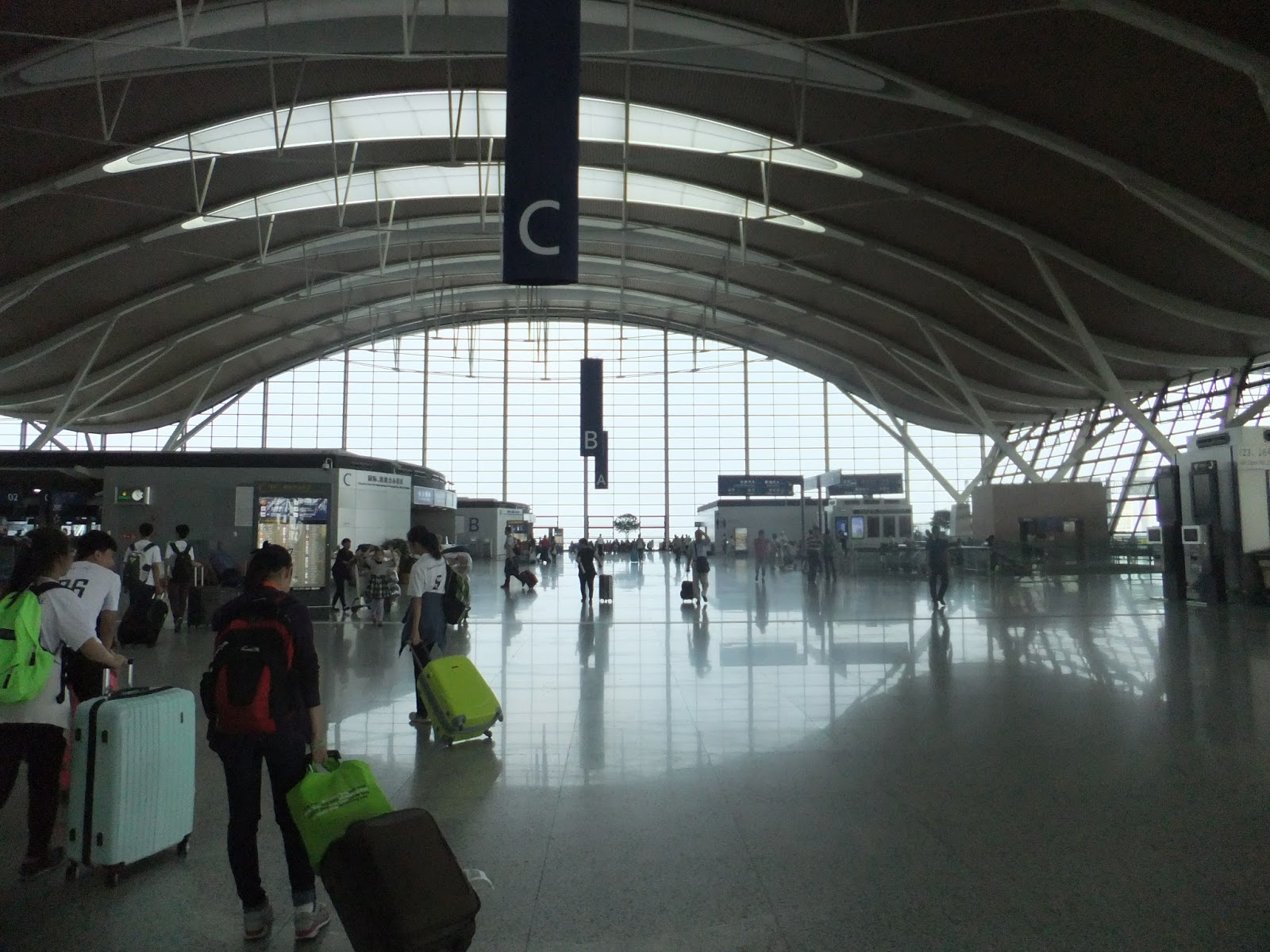
    On the 26 of May, my class, consisting of 34 students boarded the aeroplane SQ380 A380 towards Shanghai Pudong International Airport.


 Upon arriving, we travelled to the city of Shanghai and had dinner. After dinner, it was already dark and we made our way to The bund, or also known as 外滩. At The bund, it was a beautiful scenery with the spectacular view of skyscrapers. The place was decorated with colourful light. The bund was a long stretch of board walk along the river. Together with the fascinating skyscrapers and the refreshing cool wind, it was an enjoyable experience. Next, we went to the Huangpu River (黄浦江) and took the cruise. On the cruise trip, we saw many hotels, shopping mall and of course the major tourist attraction, the cruise. There were also many banks such as ISBC, HSBC, DBS etc.


    From this tourists attraction alone, I have gained some knowledge of how China economy function in Shanghai. Firstly, it is able to earn income from tourism. This place is situated with hotels and entertainment for tourists. This will attract tourists to go to that particular place and it provides housing and is convenient to the tourists as they can easily have a day filled with fun without moving to further places.
    Another reason is due to the success in finance in China. China has many banks and it is their primary source of income.
    At the bund, our form teacher, Mr Dela Cruz, taught us new value, situational awareness.
    Since we arrived in Shanghai in the late afternoon, we did not have much time before the sun sets and with this, the first day of our OELP has ended.

Day 2 : 27 May 2015
   
    On the second day, we had to wake up early to leave for Yangzhou. Fortunately, me and my roommate woke up earlier and were the first few to proceed to the dining area to have our breakfast.
Since this was our first breakfast, we had high hopes. To our disappointment, the food was not what we had expected. However, I enjoyed the pork bun and ate 3 of them. Whenever had had their breakfast, we were all ready to leave for our destination, Yangzhou. During the bus ride to Yangzhou, we had observed the change in industrial area. From tall skyscrapers to paddy fields, it was a 180 degree change, be it the way people live or the economy.
My CID group with the tour guide and the bus driver
 
     Upon arriving at Yangzhou, it was soon 12pm. First, we had our lunch before proceeding to Geyuan Garden ( 个园). As someone who did not know how to appreciate nature. I did not really enjoy the visit. To add on, it was raining and we had to listen to the tour guide at the same time.


  Next, we were supposed to go to the Chinese Paper Cutting museum. However, another class of our batch was in the process of cutting the paper so we had to change our destination to the next attraction, the Beijing-Hangzhou Grand Canal.


A picture of Beijing-Hangzhou Grand Canal


We had a boat ride on the river. Me and my friend, Kieren, were stretching out our hands through the window to take picture of the lake. The lake was a simple one, with a long stretch down. The lake was calm despite the raining weather and many people were feeling sleepy with the slight rocking of the boat. However, me and my friends were using our cameras to take the bridges that we see.


After the boat ride, we went back to the Chinese paper cutting museum. This time, we were able to carry out the activity of cutting paper. The process was a treacherous one. In order to cut the paper, we needed to be very precise and it takes a lot of time as some of the pictures are very complicated. My tablemate was cutting one of the hardest picture and he was so determined to finish cutting it that he was still sitting there when everyone was done.
My friend working hard to finish the paper cutting activity
 
 Later that night, we went to have our dinner. Then, we walked to the nearby supermarket to compare prices of the food in China and Singapore. Most products were cheaper than Singapore, except the imported goods. They cost higher in China than in Singapore.
    When we reached our hotel, we proceeded to the meeting room to have a debrief by our form teacher. That night, the debrief was about comparing between Shanghai and Yangzhou. Compared to Shanghai, Yangzhou has more greenery and the sight of people riding motorised bicycle is also significantly higher. However, Shanghai was more industrialised and had modernised buildings. From this, we are also able to infer the difference in the pace of life between the 2 states. Yangzhou has a generally slower pace of life compared to Shanghai were the traffic is usually congested and people bustling around.

Day 3 : 28 May 2015

    Today, we were heading towards Shu Ren International School. Upon arrival at Shu Ren International School, we were greeted by the principals of the school and we were invited to take a picture together. After taking picture, we proceeded to observe the way lessons were made in Shu Ren international School. From the way the teacher teaches and students reaction, I can tell that the students rarely talk to each other and always listen to the teacher attentively. Also, whenever they were told to answer question, they were not hesitant at their response but rather confident and just speaks out the answer loudly. This is something that most Rv students are unable to do and I admit that I am one of them. Thus, we should learn from them and try to bring this positive attitude into our classrooms.

      Next, we proceeded to the hall to have a lesson on Wushu. The moves seemed easy but was complicated to do. However, in no time, we had gotten the grasp of it and was able to carry out the moves swiftly. We also decided to  show our own school's Wushu moves, 立化拳.
      After lunch,  we watched both schools present their performances and presentations. Students from Shu Ren international School were really talented and they were able to perform their pieces with their best effort. Even despite that there were some errors, they did not give up but persevered till the end. This is really amazing as this is opposite of RV's culture where students will have a setback when they meet with a problem
    Following that, we went to Shu Ren International School's garden. It was like a small park but was very big compared to our garden. They were many plants and the teachers explained that most of the plants are planted and taken care by students from Shu Ren Intenational School.


    After that, we had a friendly competition of basketball with Shu Ren International School. Despite the fact that we were losing, Rvians continued to cheer for our fellow friends. In the end, we were defeated but it was a game that had closed relationships between students.
     After that, we left the school all tired but I believed that is a fun-filled game and all my fellow classmates had enjoyed it.

Day 4 : 29 May 2015
  
     Today, we had another visit to Shu Ren School, but it was the old campus. However, the hospitality towards us was the same as the more modernised school. Firstly, when we reached there, we exchanged gifts with our buddies over there. Through conversations, I found out that some of them plays the same game as me! But it was rather hard to converse as my Chinese was weaker and I could not rly understand their language. We exchange gifts and that was the end of the activity. At the old campus, we also learnt how to make our own wristband. Students from Shu Ren School gave a fantabulous skit and they did not show any slight mistakes. The students also gave an introduction about the salty egg. I tried it during lunch and it was so salty. My friend ate the egg without rice and to him, it was not salty at all. All of us were so amazed at him that we found it unbelievable. Next, both schools presented their performances to each other and it was a fun-filled one. We were all so nervous about the performance but it ended smoothly. We believe that both schools enjoyed each other performances. Lastly, we went for 书法课. The students were very patient at guiding us on how to write the Chinese words and they repeated the instructions countless times despite that I could not catch up with them. Their patience is really commendable and this is one thing that I can learn from them. With that, we bid farewell to the students and the principals that have been good hosts.


      Our next destination was to go to Xinhua Book Store. The Book Store was very big, it was 6 stories tall with different books on different levels. However, according to my teacher, there were not any books on Sun Yat Sen and he asked me why? I believe that China was communist country in the past and it was Sun Yat Sen who had made it democratic, that was why there was not any books about Sun Yat Sen. I still remember that my friend bought a Chinese book and told Mdm Lim to send the our Chinese teacher, in the end he was told that we needed to write a review about the book. It was so funny!

Day 5 : 30 May 2015

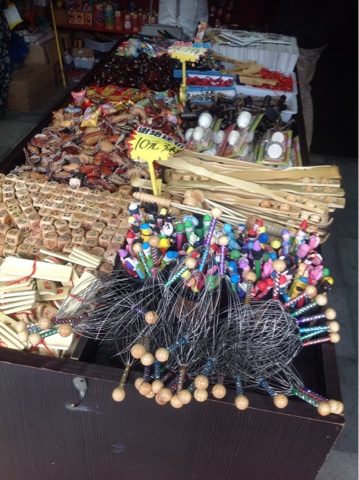
    Our first destination was the visit to local market. The local market was more of buying pets, jade, pottery etc. This were the main things that I observed in the local market. The market had many mini shops selling all the jades and ancient products. The place is more for the older generation compared to the younger ones.

      Today, we visited the former residence of Zhu Ziqing. Zhu Ziqing is the author of a story called "背影“ . His former residence is in a housing estate where there are many one storey houses. The tour guide says that Zhu Ziqing is a respectable man who had done countless contribution to China. There is a picture in the resides of Zhu Ziqing where one of the high ranking official came to visit Zhu Ziqing former resides. This shows how much respect is given to Zhu Ziqing.
     The Dongguan street was the time where most people began to spend money. Dongguan street is a street that is straight alley. Dongguan street has many shops for souvenirs and also many shops that sells handicrafts. There is also a structure at the entrance of the street which is similar to a castle. The view that one can see at the top of the structure is really amazing and breath taking as it is possible to see the long stretch of shops.
                                                      Picture take at the top of the building
                 
     Next, we went to see the famous 瘦西湖. The way that the river blends in with the river is just amazing. Even though the walk at the lake was very long, it was a once in a life time opportunity that I get to see the nature blending in with the lake.


Day 6 : 1 June 2015

      Today is the second last day and also the day where we travelled back to Shanghai. Having breakfast in the bus, most of us went to sleep as we all did not have enough sleep. Upon reaching Chenghuang Miao, we were dispatched and were told to go and walk around in our CID groups.Chenghuang Miao is very different from Dongguan street. Chenghuang Miao looks more modern than Dongguan street and the shops are also air-conditioned whereas Dongguan street is more ancient looking.

   Next, we went to the Shanghai Science and Technology Museum, we proceeded to the exhibition hall for animals. The exhibition there was really amazing, the animals looked as if it was real and we were given time to explore the exhibition in our groups. Following that, we proceeded to watch a 4D movie and it was really exciting as the seats were moving up and down expectantly, it was a really thrilling experience.


   Next, we went to the Oriental Pearl Tower, it was what I was most looking forward to. Taking the elevator up, I could feel my ear get blocked as the pressure slowly rises. When I reach the top, the view was breath-taking. The city, Shanghai could be seen from all directions. The ground was also made of glass and was transparent. This enabled us to see the bottom of the Oriental Pearl Tower and it was pretty scary. The air was really chilling and it was an unforgettable experience.


   After taking countless pictures on the Oriental Pearl Tower, we went to the French Concession. It is said that that was the base of the French when it was taking control of Shanghai. We walked around the area and I found that everything in the area was very westernised, including the shops, the house and even the tilling of the floor had the western feeling. The picture below shows the mixture of a Chinese and a Westerner house.


                                                      On the way to Tian Zi Fang

  
   Our next stop was Tian Zi Fang, Tian Zi Fang is a beautiful narrow alley that has many shops by the side. To me, it was not a shopping place but a place for us to see the way that Tian Zi Fang was built, it  also looked western as it was in the Old French Quarter.

Day 7 : 2 June 2015
    
    It was the last day of our trip. Our first destination was the Qibao Ancient Town. The Qibao Ancient Town lived up to its name. The walls were really old and had the ancient feeling. The Qibao Ancient Town was also the town where most of the CID groups bought their group identity.


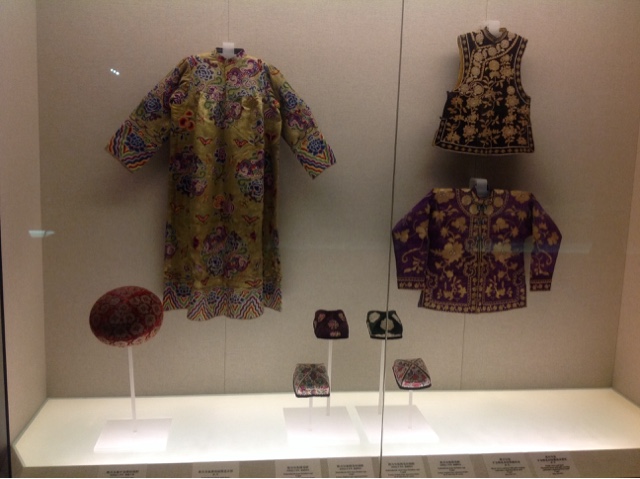
     Next, we went to the Shanghai Museum. The Shanghai Museum consisted of items that are from the Ming and Tang dynasty. There are many ancient stuff, like the currency that was used in the past, the clothing and even the furniture. There is difference in the items based on the dynasty.


     After viewing all the exhibitions, we left the museum and headed towards our last stop, Shanghai Urban Planning Centre. However, it was closed as we had swapped our schedule. But is was alright as humans do make error. Hence, we spent about an hour hearing Mr Dela Cruz's jokes and riddles.


Finally, it was time to heard to the airport, to me, time flew very quickly. It is as if the start of OELP was only yesterday and the 7 days had actually ended. With saddened hearts that we were going to leave China, we boarded the plane... Goodbye China...


Thursday, 18 June 2015

Overall OELP trip reflection ✈️🇨🇳

Overall reflection ✏️
After OELP, I felt that the class have matured more and grown more together. Throughout the seven days that we have been together, we have become more bonded and closer. Last year's class outing was unsuccessful, with only 5 people being able to go. However, this year, the number of people who turned up was 28. This overseas trip would not be the same if I had not gone with 2I. 

⭐️Situational awareness⭐️
Through this trip, I also truly learnt the meaning of two important words, and that is "situational awareness". Being situationally aware does not only mean that we should only look out for ourselves and pay attention to the surroundings ourselves, instead, it also means to remind our classmates to pay attention to their surroundings so that no one gets left behind. There were times in which we would get carried away taking photographs and not pay attention to the tour guide and obstruct other people's way. When this happens, our teachers would remind us to practice situational awareness and to pay attention to our surroundings and be alert at all times. 
⭐️Punctuality⭐️
Aside from this, I also learnt the importance of punctuality and looking out for one another. There were some days in the trip in which our classmates overslept and caused our schedule to be delayed. I feel really bad when that happens because my classmates get scolded and I knew that they could have made it on time if I had noticed that they were missing for breakfast and had gone up to their hotel rooms to check. However, no one noticed because we did not bother to look out for one another. It is really troublesome when our schedule gets delayed and all that trouble could have been prevented if we have cared more. 
 ⭐️Everything about Shanghai and Yangzhou⭐️
The term "everything" is so broad and vague and I would avoid using this word. However, the things that I have learnt about Shanghai and Yangzhou is simply too much to be listed down individually. 
First of all, I have learnt so much about Shanghai and Yangzhou's history from this trip. From the tourist attractions and from the guide, I have learnt so much about Yangzhou and Shanghai. I now know that Shanghai didn't always used to be this wealthy and commercialized. It was once a poor fishing village and had developed greatly since then. Although Yangzhou seems to pale in comparison to the modernized and commercialized Shanghai, I feel that Yangzhou has it's own unique charm. It has history behind it too, and one of the most renowned person in Yangzhou would have to be Zhu Zi Qing, who was a popular writer among people in Yangzhou. 
Secondly, I also learnt to treat everything with an open mind, and not making harsh conclusions about a particular place. My perceptions of China wasn't that great before OELP. However, after this trip, my perceptions changed greatly. I once thought that all Chinese in China were rude and loud. However, after this trip, I realized that not all Chinese are rude. While some might push and shove us out of the way, majority of the Chinese would make way for us and some even nodded their heads in a friendly manner at us when they realized that we were on a school immersion program. Some even asked us which country we were from and made small talk with us! This revealed to me that I should never make harsh conclusions about a country unless I have been to that country and experienced what it is like to live there. 
I also learnt that Shanghai is economically strong and stable while Yangzhou goes to great lengths to preserve heritage and greenery. Shanghai has tourist attractions that reveals just how much wealth the city has. The bund showcases China's banks and also international banks, which suggests how rich the city is. Tourist attractions such as the oriental pearl tower is a skyscraper. Towering over smaller buildings at over 200 levels. The ambiguous and modern architecture of that place suggests just how much money Shanghai has in order to build that. Yangzhou has places that suggests that they were intentionally preserved so as to preserve heritage and greenery. Geyuan garden and slender west lake were not demolished so that greenery would be preserved. Zhu Zi Qing residence was not demolished as it was significant to Yangzhou's history, since Zhu Zi Qing was well known in Yangzhou. 
Yangzhou's education system is a bit different from Singapore's, in a sense that students there have lesser project works and and that students there are required to report to school at around the same time as us, but stay back in school late into the evening. They are required to be even more competitive than students in Singapore, due to the fact that there is overpopulation in China and that students have to do exceedingly well in their fields in order to find good jobs in future. In Singapore, we do not face that problem and finding jobs are not as difficult for us. 


2015 OELP Trip reflection ✈️🇨🇳

✈️ 1st day in China (Shang Hai)✈️
After the 6 hour flight from Singapore, we finally touched down in Shang Hai. It was approximately 4:30 pm after we collected our luggage and departed from the airport. On the tour bus, the tour guide briefly explained to us the history of Shang Hai and things we could do in Shang Hai. From the bus ride, I learnt that China was once a fishing village and it developed a lot since then. I also learnt that the French concession was a popular place among foreigners back then, thus it is preserved till today. I also learnt that 小笼包 was a popular dish in Shang Hai :D. We then travelled to a restaurant to eat dinner. 

     
                                               Our first dinner in Shang Hai :)

After dinner, we went to the bund, which is a popular tourist attraction in China. We were greeted by vibrant and colorful lights when we reached the bund. Everyone looked on with awe at the bright lights and the modern buildings that were located along the river. We walked along the river and looked at the banks, important business buildings located along it. After that, we went onto a ferry and were able to take more photos and get to see the buildings located at the bund better. 


                                                                  CID group 5⃣


                                                            The bund

During debrief later on in the hotel, our teacher told us more about the bund. We learnt that China was able to have economic growth every year due to the money made by the the bund. In terms of tourism, the bund was able to help China gain money due to the fact that the bund is a popular tourist attraction and tourists would pay money to visit it. (e.g.paying money for the ferry tickets) Also, the bund also has banks and business buildings located along its River and these infrastructures are the backbone of China's economy. I feel that the bund is something like the Singapore River, because both places are tourist attractions and both places have important buildings and infrastructures located along the river. Tourists who go to these places would know how wealthy and economically strong a country is by looking at the bands and important businesses located in the country. Local banks and international banks are found along the river and thus illustrates the strong economy of China since China has its own banks. Multiple business buildings also highlight the fact that China was able to do business with other countries and have people from other countries come to China to do business. Many are attracted to the banking finance sector of Shang Hai. Local business buildings also show that China is strong in terms of economy. Shang Hai is indeed an important city for economic growth. 

🚌 2nd day in China (Yangzhou) 🚌
We woke up early today because we needed to travel to Yangzhou and the bus journey was 4 hours long. 
We went to the Chinese paper cutting museum, geyuan garden and the grand canal on that day. We also went to a local supermarket there. It was raining throughout the day and although everyone was feeling really cold and tired, we still managed to get through the day leaning new things. I felt that the class really displayed class spirit on that day because although the rain was pretty heavy at certain times of the day, many of us offered to share our umbrellas with those who didn't have one. To that, I would like to say that I'm really proud to be part of 2I. 
In the Chinese paper cutting museum, we learnt to cut up really thin paper into intricate designs and it was really hard for me because somehow, I always manage to do badly in art. However, with the guidance of the people there and cutting according to the lines indicated, I managed to produce a decent piece of artwork. They also gave us a pair of gold and sharp scissors that had intricate designs as a gift to us. 

We also observed the beautiful scenery and plants in geyuan garden. Geyuan garden had plenty of greenery and also had a lot of rock structures in it. It was beautiful, as it was also home to an extremely wealthy guy who lived in the past. The house itself was huge, with its kitchen and bedrooms separated from one another. It was preserved really well and visitors could go into the house and really know how it felt like to live as a wealthy person in the past. 

     
                                                                个园


                                     My CID group and I in front of geyuan garden 

We also went to the grand canal and we cruised down the grand canal in a boat and was able to observe the little things that make the canal beautiful and the scenery around it. While on the boat, there was also a documented guide about the grand canal and the history of the grand canal was explained thoroughly in the video. 

                                                         
                          Scenery observed when on the boat on the grand canal.

During debrief, we compared the difference between Shanghai and Yangzhou and also talked about the importance of preserving Chinese heritage. 
The most obvious difference between Yangzhou and Shanghai would be the pace of life. The pace of life in Shanghai is faster than in Yangzhou. In Yangzhou, there are many places that indicate that Yangzhou has a slower pace of living, for example, Yangzhou has more tourist attractions that focuses on scenery and Chinese heritage. Yangzhou has tourist attractions such as geyuan garden, grand canal, slender west lake and 24 bridges that focuses on greenery. However in Shanghai, there are tourist attractions such as the oriental pearl tower, chenhuangmiao, Shanghai urban planning centre and Shanghai museum which indicates that the pace of life there is faster, since there is a higher level of technology used.
Shanghai is also more modernized than Yangzhou. Shanghai is more modernized as there are many foreigners going there to do business since it is a thriving business port. Thus, it is modernized because of the economy there.   
Toilets in Shanghai are also cleaner, because there are more tourists going there and having cleaner public areas would leave a better impression on the tourists. 
Also attractions such as the Chinese paper cutting museum in Yangzhou is also preserved due to the fact that the government wants to preserve heritage. It is preserved so that the Chinese would still be in touch with traditional beliefs. However, there are lesser tourist attractions in Shanghai that    preserves heritage. 

       
       Tourist attractions in Yangzhou focuses more on greenery and Chinese heritage. 

We also compared the stuff that could be found in China's supermarket but couldn't be found in Singapore's supermarket. We saw that a four poster bed was on sale in the supermarket there and beds are not sold in Singapore's supermarket. 
Also, we found that the supermarket there did not sell nerf guns or milo powder, products that are common to us Singaporeans. We later found out the reason for the lack of imported goods such as milo powder and beef guns was due to the fact that China was strong enough economically to produce their own products. Products produced by them would be much cheaper as compared to imported goods since goods are produced in China instead of being transported from other countries. We also found that oil, water and meat was much cheaper there as compared to Singapore since Singapore's oil, water and meat are imported and would be more expensive.

🏫 3rd and 4th day in China (Yangzhou) ( school immersion)🏫
We went to shuren school on these two days so that we can gain more insight into the Chinese students' lives. We also went to a local bookstore on the fourth day.

We walked around shuren school with guidance from the teacher and principal there. We realized that there was actually a park-sized garden in their school and their school was quite big. We also observed how a Chinese lesson was conducted there. Aside from that, we also met our buddies and exchanged gifts with them. We also learnt how to write calligraphy and also had a wushu lesson with them. They were really interested and willing to learn more during the wushu lesson and I felt that they could perform better than us. We also had a competition with the students in their school and there was a basketball match between their school and our school. Although we lost the match, I felt that we displayed more school and class spirit throughout the match by cheering for our friends and I felt that that was what mattered the most. The most exciting part of the school exchange would have to be the watching the performances shuren school has put up for us and also performing our performance to them. We could truly showcase our hard work since we put in a lot of time and effort into putting up the performances.  I felt quite nervous before the performance but the entire process of performing for the students if shuren school was really fun:)
      
                                        Garden (more like park ) in their school 

        
                                                             Shuren school 

                                  
                                             My buddy and her friends with me 

                        
                                                       Class performance 
          

Through this experience, I have really seen what it is like to study in Yangzhou. There are many differences in studying in a school in Singapore as compared to studying in a school in Yangzhou. 
* Class participation*
In Yangzhou, students are more participative than in Singapore because students are willing to participate actively in class while in Singapore, students are called on by their teachers. 
*Mode and duration of travel*
My buddy also told me that she either bikes or walks to school and the journey only takes her 10 minutes. However in Singapore, I would know of many who would take public bus and MRT to school and the time taken to travel to school would be close to an hour.
* Group projects and individual work *
 There were little group projects done in China and most work done is mostly individual. Perhaps it's because there are more people in China and students thus have more competition to become better.
*School spirit*
We also displayed more school spirit than the Chinese from the school even though they had more people to cheer on their basketball team against ours. 
*Food served* 
Lunch there was served by lunch ladies and it was compulsory for meals there to comprise meat, soup vegetable and fruit. It is vastly different from Singapore where we could buy our own food and can also buy sugary drinks and unhealthy food. 
     
            Lunch in shuren school is different from what we would get in Singapore. 

Also, when we went to the local bookstore, we saw that there were many Korean and Japanese books that was on sale. This shows that there are many Korean and Japanese who lives in China. This might be because people from different countries come to China to do business or seek better opportunities. Those books might also be on sale so that the Chinese would be able to learn new languages so that they would be able to work in Korea or Japan. We also found calligraphy paper and chaptehs on sale and these items are sold so that tradition and culture would be preserved. The bookstore also had little English books except for assessment books and thus shows that the Chinese there hardly read English books for leisure.  The most interesting observation that I have made about the bookstore would be the fact that they sell books about our founding father Mr Lee Kuan Yew. My inference would be that the Chinese people looks up to our founding father and thus books about him, about our nation can be found in local bookstores in China. 
                                                                   Science assessment books that would be written in English in Singapore are in Chinese. 

                                      
                                        Mr Lee's memoir is found in the local bookstore. 

🍃 5th day in China (Yangzhou)🍃
On this day, we went to the local market, slender west lake and 24 bridges, zhuziqing residence and donguan street.
The local market was vibrant, with peddlers setting up mats on the floor and persuading people to buy their crafts. As the name suggests, it was truly a "local market visit" for us, without souvenirs to buy since it catered to the locals.There were pet shops, pottery shops, shops that sold plants and even a mini aquarium. Suffice to say, the local market emitted a positive and lively vibe. 
                                     
                                                         Local market visit

Next, we headed to slender west lake and 24 bridges and we were given 2 hours there to admire the greenery there. I thought that 2 hours would be too much to walk through  the park, but the duration proved to be just right. Our guide told us that many poets were inspired by the beautiful scenery there and composed poems based on the slender west lake. It was beautiful there and there was a lot of greenery. Our class took a class photo( excluding the boys) on the 24 bridge because there was 24 steps on that bridge and our class had 24 girls so. Each girl stood on one step:)


                                            Slender west lake and 24 bridges 

After that, we went to the zhuziqing residence to know more on how zhuziqing lived and how he came up with inspiration to write so many Chinese novels. We learnt there that zhuziqing wrote many well known Chinese novels, not only 背影, which my class was familiar with since our Chinese teacher promoted it endlessly. 

                                   
                                                       Zhu Zi Qing residence 

We went to donguan street next, and I bought most of my souvenirs for my family and friends there. However, I felt that it wasn't a waste of money as it was money well spent:) Also, my friend also insisted to buy a toy chicken (I really have no idea why) even though it was such a waste of money and has no practicality. It had many quaint shops tucked away in alleys there and it was really fun to venture the street together with my CID group. Throughout this trip, we also reminded each other to carry our bags in front of us so that pickpockets would not have easy access to have valuables. I felt that among all the places that we were brought to to buy souvenirs, this was the best place among the others. One shop that was really popular among my class was the tea shop. 


                                                        Donguan street
       
                                        Group selfie feat. annoying chicken 

During debrief, we discussed the importance of preserving heritage. The Zhu Zi Qing residence and slender west lake could easily be demolished and be built into infrastructure that would be more useful economically. There were other parks in China and parks do not make as much money as banks. However, slender west lake and 24 bridges were preserved for a reason since the government did not demolish it. The reason why they are not demolished is because the government does not want the Chinese to lose their Chinese roots and forget their heritage. Zhu Zi Qing's residence was preserved because he was the pride of Yangzhou and he represents Yangzhou through his novels and slender west lake was preserved because it has a rich history behind it and has a deep sense of Chinese culture.We thus understood the importance of preserving heritage from this.

☀️ 6th day in China (Shanghai) ☀️
We travelled back to Shanghai today and we had to wake up super early again. 
We went to Chenghuang Miao first and once again, we could find many shops that sold souvenirs and it was really crowded there. It was really lively and the architecture of the temple was really grand. We also spotted multiple Starbucks shops there and the price of coffee there was about the same as Singapore. It was probably due to the fact that Starbucks is a company that is established overseas and the prices of coffee there is defiantly much higher than what one would get from a local coffee shop. 
                                    
         
                               Chenghuang Miao ( really crowded as shown above)

Next, we went to the oriental pearl tower and it was quite terrifying when we had to walk on a transparent platform and get to see everything below us when we were that high up. From the oriental pearl tower, we could see all the way to Taiwan and it was definitely an interesting experience. I remember being really scared and thinking of all the worst case scenarios if the glass platform suddenly gave way beneath our feet. I felt that being in the lift and getting to over 200 stories all the way up to the place with the glass platform was a cool experience too.


                           My CID group and Mr Dela Cruz on the oriental pearl tower.

After that, we went to Tian Zi Fang and the Old French concession. Tian Zi Fang is an alley that sells souvenirs and decorative goods at a slightly higher price than donguan street and Chenghuang Miao. I felt that it was a quaint place because stuff that was sold there focused less on touristy souvenirs, instead Tian Zi Fang sold more unique handicraft.

The Old French concession was an interesting place as it was an indication that westerners used to reside in China in the past. I feel that it still caters to the westerner's preferences now because there were many food stores that would be commonly found in western countries. (E.g Godiva)  It's architecture follows that of those in western countries and walking down the streets of the old French concession really does make one feel as if they are in a western country. 
  
                                               Italian restaurant found here.

We also went to Shanghai science and technology museum, and there were many wax figures of animals from different parts of the world. There was also plaques in front of the animals that displays information about the animal so that we would have more knowledge about them. The experience was like going to the zoo, with real life animals replaced with wax figures of animals that couldn't move or respond.  
     
                                            Failed group selfie 😂
     
     
                   Wax figurine of goats at the Shanghai science and technology museum 
                                            
 Our class behaved badly today due to the fact that we were ignorant and did not practice situational awareness. We were all so busy taking pictures at tourist attractions that we ignored the tour guide multiple times when he was explaining to us about a particular place. We also obstructed people's way because of that. When we were told to clear our rubbish on the bus, few heeded his advice and litter was thus strewn all over the bus. I guess everyone's spirits were dampened but we were all disappointed in our actions. We thus learnt the importance of situational awareness from today's trip.

✈️ 7th day in China (Shanghai) ✈️
Alas, all good things must come to an end and in a blink of an eye, our oelp trip has ended. We were all sad that we would never get such an opportunity to travel overseas with our class, 2I anymore. I really felt that our class have bonded so much throughout this trip and I know that the memories that have been created throughout this trip would never be forgotten. 

On the last day, we went to qibao ancient town and Shanghai museum. Qibao ancient town sold souvenirs and I felt that it was less of a touristy place as compared to donguan street and Chenghuang Miao. Although all these places sold souvenirs and what not, qibao ancient town was more localized. There were many shops that sold all items for 10 yuan. Aside from that, we also saw shops that had Chinese traditional costumes and provided photography services. I found that interesting, as that can't be found in other places.
   
                                                  Qibao ancient town

 Shanghai museum was fascinating, as it houses many intricate and detailed ancient art pieces and pottery. Interesting fact about this museum is that the brochures provided there were printed in multiple languages such as English , Chinese and Korean as it is a really famous attraction and perhaps tourists from many different countries go there. All of the items were ancient and dated back to centuries ago. I found the art work most interesting, as artists then really depicted what life was like back then. 
       
                                                Pottery found in the museum. 

       
                              Traditional Chinese costume back in the olden days. 

Finally, it was time to head off to the airport and return to Singapore. On the bus while headed to the airport, I could feel that everyone was really reluctant to leave China because we know that our class, 2I would never get this chance to bond with each other already. Although feeling sad to leave China, I also felt happy because I know that I have just passed an important milestone that I would remember forever in the years that I'm in RV. With that in mind, I smiled and vowed to myself that I would remember this trip forever. 

Sunday, 14 June 2015

❁2015 OELP Overall Reflection [INDIVIDUAL]

HERITAGE 
noun
<an inheritance>
  After the OELP trip to China, I have certainly learnt a great deal about China's heritage! I have learnt that China has a rich and vibrant heritage and inheritance of knowledge and culture the past 5000+ years. There is a dilemma of cultural heritage conservation and economic development and now, I have learnt that not only economic development is important to a country, but heritage conservation is extremely vital as well. Heritage is important to preserve as firstly, heritage can give people a connection to certain social values, beliefs, religions and customs. This will allow them to identify with others of similar mindsets and backgrounds.
  Secondly, cultural heritage can provide an automatic sense of unity and belonging within a group and allows us to understand our ancestors' generations, learning more about the history of our roots.
  What can Singapore do to make the local arts scene more vibrant and to further develop our heritage? The government can encourage community participation and engagement and also provide non-ticketed and free attendance for heritage events, encouraging more to come forward.

教育
  在树人中学,我们发现中国的同学比较有信心。例如,当他们的老师在课堂上提问时,他们都纷纷举手要回答。我们可以从他们学习,在课堂中用于发言和回答老师所问的问题。他们也十分友好,当看到我们时,他们会向我们挥手。
  中国和新加坡的教育体系都十分相似;我们都有小学到大学的系统,也会分发功课和举办考试。可是,我发现中国的学风都较个人主义,学校里并没有许多小组专题作业;相反,新加坡学校里有很多小组专题作业。我认为这是良好的,因为这样,我们可以学习怎样与他人沟通,并欢迎不同的意见。这在日后我们踏进社会时,会有不少好处。
  新加坡应如何从中国的教育体系学习?在中国,大多数学生都花费长时间来学习;这会培养他们辛勤吃苦的美德。我们如果学会在学校里有决心学习,以后在社会上我们也会有决心克服任何困难。
  我以前曾认为新加坡的教育体系有点受限,因为我们每天都有大量功课,但见过中国的学校后,我对新加坡的教育体系感到十分满意。我们被给予大量的自由,甚至可以带手机上学。我学到,我们应该为我们所拥有的而感到满足和感激。

ECONOMY 
  After the OELP trip to China, I have learnt that China has one of the world's fastest-growing major economy. It is a global hub for manufacturing and exporting. China's economic importance has grown vastly and I believe that we should learn from their rapid economic development! What can Singapore learn from a rising China? Even at the market exchange rate, China overtook Japan in 2010 as the world's largest economy.
  China has globalised and industrialisation plays a big role in it. In Shanghai, we saw many banks and hotels. All these are built as many foreigners come every day to China for business purposes which will boost China's economy. Hence it will only make sense if China has enough resources to host these businessmen. These international banks and hotels have attracted vast numbers of businessmen to come to China, hence helping to improve China's current economy.

历史 
  去过了上海博物馆,我对中国的历史的认知更加广泛了。我学到中国是一个历史悠久的国家,有超过5000多年的繁华历史。例如,传统陶瓷拥有历史文化的考古价值和艺术价值,都对中国的历史做出了贡献。
  传统书法是中国汉字的书写艺术,也是在中国土生土长的艺术。那也是中国文化的基本要素。还有中国传统家具,具有中国古典风格。国画就是传统的绘画,是琴棋书画的四艺之一。
  总之,在这一浸濡之旅上,我学到了许多关于中国历史的知识,真是让我获益不浅。

IDENTITY
  I have gotten to know about China's traditional cultural values and national identity. I have certainly also learnt a lot more about contemporary China's way of life and to respect these customs and values which are quite different than what we are normally used to in Singapore.
  China's identity is a truly unique and intriguing one! I really hope that I have more opportunities to learn more about China's identity in the future. :)

中国的文化
  在这一浸濡之旅上,我更加认识到了中国的早期文化还有近代中国文化的发展。
  我也加以了解了中国的习俗和中国人民的日常生活,如他们的服饰装扮风格和饮食。这次的OELP中国浸濡之旅真的使我们学到了许多。我们学会了接受与尊重与我们不同的文化。这次机会也使我们学会珍惜我们在新加坡所拥有的。我也很感激立化给我们这么一个难得的机会去中国进一步认识他们的风土人情,在多方面了解当代中国和它的悠久历史。

Thank you for reading!

Saturday, 13 June 2015

✈ Individual Daily OELP Reflections

DAY 1, 26th May 
  It was finally the first day of OELP! I remember waking up extra early to go to Changi Airport for our flight departing Singapore for Shanghai. That moment was quite surreal as I couldn't believe that our trip to China had finally officially begun. At the airport, we bid goodbye to our parents. I was feeling rather scared about going overseas without my family, but at the same time excited for the trip as I would be travelling with my friends for the first time as well!
  Upon our arrival in Shanghai, we left for a cultural visit to the infamous "The Bund", or 外滩, with the guidance of our tour guide 包导游. He was very kind and patient, and told us to call him 包导. On the bus ride to The Bund, I noticed that there was a large flow of cars on the road and generally in the city. I also noticed that there were a massive amount of tall buildings and skyscrapers in Shanghai. According to 包导, the 1990's were the golden era for Shanghai. Many foreigners had come to Shanghai to open restaurants, for example Italian and Belgium restaurants.
  We saw many banks and hotels along The Bund too. We think that it's because as Shanghai hosts more foreigners who arrive everyday for business, Shanghai also has a huge number of hotels and banks.


After that, we had dinner and then proceeded to go on a cruise tour to Huangpu River (黄浦江)! It was bright and buzzing with city lights and colour. It gave me the impression that it is a very vibrant part of Shanghai, buzzing with city life. 

  ^ the scenery we saw from the cruise ship. 
  After the cruise tour, we checked into our hotel and had a debrief, coupled with a form teacher session with our teacher Mr. Dela Cruz. 
  From the sights of the Bund and Huangpu River, it appeared to me that Shanghai's economy is very well-developed. There were tall skyscrapers and modern infrastructure in the city, and it was abuzz with the noises of a economically advanced and modern city. 

DAY 2, 27th May 
  We woke up in the early morning and travelled towards Yangzhou. 
  Upon arrival, we paid a visit to Geyuan Garden, a public garden known for its seasonal rock gardens. The Geyuan Garden is an elegant and urban wooded mountain garden, primarily made up of bamboo and rocks. 

  Next, we went to the Chinese Paper Cutting Museum (剪纸博物馆). We were taught how to cut paper intricately into a certain picture. My group was assigned to cut out a picture of a cat. It was quite hard as there were small and elaborate details for us to snip out, however we persevered and eventually finished the picture. We have also learnt that cutting paper with hand actually adds more value to the craft as more effort is put into creating it. Not just the glitz and glamour of city life has value, but also past that, value of culture and traditions are important as well. 
  After that, we went to the Grand Canal (大运河). It is a beautiful river full of greenery and nature. On the boat ride, we felt relaxed and soothed. From this, we can infer that life in Yangzhou is certainly relaxed and that the pace of life in Yangzhou, is slower. Yangzhou has one of the world's famous heritage sites, hence it must be important to preserve culture and heritage so that people can connect with their culture. 
  Then, we visited the local markets in Yangzhou! We observed that most items in China are less expensive than in Singapore. I think that this is because many goods in China are made right in the country, hence the goods are sold cheaper; whereas in Singapore, goods are mostly imported from other countries, resulting in the prices of goods being higher. 
  A comparison of life in Shanghai and in Yangzhou showed us that Shanghai is more globalized than Yangzhou. We have observed that many signs in Shanghai are in 2 languages whereas signs in Yangzhou only have 1. This showed us that Shanghai must have more foreigners visiting for business purposes, as it contributes to the economy. However, Yangzhou is more slow-paced than Shanghai and most of the time, only has local visitors for their nature, greenery and culture. 

DAY 3, 28th May 
  The first day of school immersion had us all very excited, as we all couldn't wait to experience China's school life firsthand ourselves! When we first saw Shuren School, we were all awed, as it seemed so huge and so unlike how we pictured it! The principal was friendly and kind and offered us all a warm welcome. 
  

  Then, we went into a classroom and watched a class having Chinese lessons. Shuren School had high-tech classrooms and it was fascinating to watch the lesson on a screen while the lesson is going on in another room!
  After the Chinese class, we went into another room to watch the introduction video of Yangzhou. It was fascinating to learn all about the history of Yangzhou and the ways of life there.
  After the introduction of Yangzhou, we went into the spacious indoors sports hall to have PE classes with another class. They taught us their 武术 routine and then we also taught them our 立化拳. Next, we participated in some games that Shuren School had tirelessly organized for us, followed by a basketball competition. What warmed my heart was that the RVians had excellent class spirit, chanting cheers of encouragement, even when our teammates missed a ball or got a penalty, the whole class cheered on for them. Although we lost the competition, it was still a meaningful lesson for us that only united, we can do our best.

  Next, we went to the school canteen to have lunch. We went to the teachers' and staff' cafeteria, and the food was very delicious and supple. I was very touched by the school's hospitality.
  During our FT session, we discussed how Shuren School is bigger. This is because there is more land size available in China.

DAY 4, 29th May 
  It was another day for school immersion! This time, we went to another section of Shuren School, their 树人旧校区. That day, we finally met our buddies! Mine was a nice girl who liked anime. She was very friendly. We exchanged gifts and as they still had lessons, they were required to go back to class and couldn't bring us around Yangzhou, which disappointed us a little. We watched a group of students from Shuren School present to us about Science projects, dance, poetry recital, etc.
  Next, we went to their auditorium for a performance. We took turns performing, and Shuren School's students performed drums, dance, singing and drama. They had a vibrant variety of talents, from what we could see!
  It seemed to us that the Chinese students were very confident. We also observed that in China, there were fewer group projects. Individual work was seen as more important, and the study culture over there in China is rather individualistic. During the performances, we inferred that Shuren School has more individual talents rather than group talents. I am grateful to be in Singapore as thus, we can learn how to negotiate our differences in group work and in the future, these skills of being able to work as a team will benefit us greatly.
  We found that the school did not have toilet paper in their toilets and did not have lockers. This made me feel grateful for what our school, River Valley, gives to us. We have clean toilet bowls, FCE classes, toilet paper in the toilets, lockers and the freedom to bring our phones to school. I have learnt to appreciate what I have and not to complain about it.
 

  ^ in the canteen of Shuren School :> 
  After that, we toured the beautiful school garden of Shuren School. It was a huge garden, complete with stone sculptures, a wondrous waterfall and even a beautifully built pavilion. We were all amazed that this was the garden of a school!

  Next, we proceeded to visit the infamous Xinhua Book Store (新华书局). We heard that this book store is very popular among the Chinese. It's basically the Chinese equivalent of Singapore's Popular Book Store. Xinhua Book Store had several levels, each level selling different things. We noticed that there were very little English books, probably because most of the locals do not read English for leisure purposes. There were Korean and Japanese language textbooks, perhaps for the locals to study, enabling them to go to Korea and Japan to do business. We also noted that Xinhua Book Store sold basketballs. This told us that the Yangzhou locals probably engaged in basketball frequently and that this sport was quite popular among the people. In conclusion, we learnt that looking through a book shop can tell a lot about a country's culture.
  After that, we went for dinner and a trip to the local supermarket to get some food and drinks.

DAY 5, 30th May 
  On Day 5, we got to visit the former residence of Zhu Ziqing. (朱自清故居) We learnt that this residence was built in the Qing Dynasty and I was quite fascinated with the structure of it. We learnt that this style of structure was actually the classic Yangzhou "三合院" style of building. We also got to know that the 朱自清故居 is a patriotism education base, as Zhu Ziqing was a patriotic writer. I think that the 朱自清故居 contributes to traditional culture as the building style of his house was classic and can influence people to be more patriotic and love the country.
  Then, we visited Dongguan Street (东莞历史文化街).  It is an ancient alley and street in the center of Yangzhou. There's quite a number of shops in Dongguan Street and life was very vibrant and carefree there. My CID group mates and I bought some souvenirs there for our families and friends. From what I saw, Dongguan Street was a street full of culture and heritage. Small handicrafts and traditional crafts were sold in many shops and there was an antique, or 古色古香 feel about the place. I was fascinated by the deep sense of culture around this street.

  Next, we went to see Slender West Lake (瘦西湖). It's a well-known scenic spot in the city of Yangzhou and also is a national park in China. The lake is surrounded by many weeping willows and is a gorgeous attraction. I had felt very relaxed while walking around it.

  We then visited Dong Quan Men Alley (东圈门历史街). This is a quiet ancient back alley that contains a host of sites well worth visiting. We learnt that the alley's main entrance gate dates back to the Qing Dynasty. Small restaurants and shops line the alley, yet it lacks any sense of commercialization.Some food was also sold there, and we even saw a street vendor make sweets on the spot. She drizzled syrup in intricate images and pictures on pieces of translucent paper, then as it got into place, they would be ready to be eaten! I think that this is good as once in a while, we should really appreciate the culture and little things around us, rather than focus on the buzz of a busy commercialized area.

DAY 6, 31st May 
  On Day 6, we returned to Shanghai. We then went to the Shanghai Science and Technology Museum (上海科技馆). It was a fascinating and interesting place! This museum is modernized and very large. It even has a 3D movie theater! The museum has 13 permanent exhibitions and my group mates and I went to the Spectrum of Life nature exhibit which imitates the scenery of Yunnan Province and displays its diversity of creatures. After, we even watched a short movie in the IMAX 3D theater, which was really exciting as our seats could be elevated and there were some special effects like water sprays, etc.

  Next, we paid a visit to Tian Zi Fang (田子坊). It is an arts and crafts enclave that has developed from a renovated residential area in the French Concession area of Shanghai. Tian Zi Fang is well-known for its small craft stores, coffee shops, trendy art studios and narrow alleys. I felt that it was a very quaint and interesting part of Shanghai, as it was very artsy and expresses more about the culture in Shanghai.
  Then, we visited the infamous French Concession (法租界). We learnt from 包导 that the French Concession was a foreign concession in Shanghai from 1849 to 1943. Although there was some re-development over the last few decades, the French Concession still has a distinct character and air about it and is famous for the preservation of local 石库门 architecture.

  After visiting the French Concession, we travelled to Chenghuang Miao (城隍庙), a temple located within the old walled city. The 城隍庙 not only refers to the temple complex, but also the traditional district of commerce surrounding the temple. There are over a hundred stores and shops in this area and most of the store buildings are nearly a century old!

DAY 7, 1st June
  Our first stop was Qibao Ancient Town (七宝古镇). I felt that it was quite like the ancient streets in Yangzhou, however, we noticed that Qibao Ancient Town had quite a number of costume businesses, where you dress in traditional Chinese clothing and take photographs. Instead, the ancient streets in Yangzhou had no such businesses. We believe that this is because Shanghai has more tourists than Yangzhou, as it is a more globalized city. This is probably why Shanghai hosts more of costume businesses, which are more targeted at tourists.
  Later, we visited the Shanghai Museum (上海博物馆).  It's a museum of ancient Chinese art and is considered one of China's first world-class modern museums. We saw a lot of ancient antiques of China, e.g. ceramics, calligraphy, furniture and paintings. We have all learnt a lot about the history of China through this trip to the museum.
  Next stop is the famous Oriental Pearl Tower (东方明珠塔)! We're all really excited for this trip as we have heard prior to the trip that the Oriental Pearl Tower is an extremely tall structure and has a 263 meters viewpoint. It felt truly surreal to be standing on transparent ground and look down at the beautiful scenery beneath! We had a bird's eye view of The Bund, even.


  Next, we had to leave Shanghai for Singapore. I felt truly reluctant to be leaving China as over the 7 days, I had started to understand China's customs and ways of life. It had also been great fun travelling different places and learning all about China's traditional culture, everyday customs and modern way of life. We may have encountered a number of customs that differ from what we are used to, in Singapore, however we have learnt to be courteous, patient and considerate and try to understand those customs. It has been an incredibly beneficial trip to China that opened my eyes to many new different ways of living and I am very grateful to my school for organizing OELP, giving us the chance to experience and immerse ourselves in China's culture and modern customs.